

 Doğukan Akbaş / Pexels
Netherlands: what to see and when to go
· Cyprus Travel Deals
The Netherlands sits mostly below sea level, held back by dikes, pumps and a national obsession with water management that predates the country itself. Ride a bike out of any city and within twenty minutes you're among polders, black-and-white cows and windmills that once drained the land you're standing on. This is a country engineered rather than found, and once you notice it you can't stop.
What the Netherlands is actually like
Forget the coffee-shop-and-Red-Light-District shorthand. That's a few streets in one city, and most Dutch people find it faintly embarrassing. The real texture of the place is flat green farmland, brick terraced houses with enormous windows and no curtains, canals in every town rather than just Amsterdam, and a population that cycles in the rain without complaint.

The Dutch are direct to the point of bluntness, which reads as rude until you realise it's meant kindly — they simply don't see the point of dressing things up. Almost everyone speaks excellent English, so the language barrier that trips up travellers elsewhere barely exists here. What does trip people up is the assumption that everything runs on hospitality. Service is efficient, not warm; you're expected to be capable and self-directed.
It's also relentlessly organised. Cycle lanes are their own road system with their own rules, and stepping into one without looking is the fastest way to get shouted at by a local on an omafiets.
Where to go in the Netherlands
Amsterdam is the obvious start and worth it, but treat it as one item on a list rather than the whole trip. The canal ring, the Rijksmuseum and the Van Gogh Museum reward a couple of days. Beyond that, the centre is crowded, expensive and increasingly weary of tourists.

Utrecht, half an hour south, is what people imagine Amsterdam will be — canals with cafés built into the old wharf cellars at water level, a huge student population, fewer crowds. If you only have time for one canal city, some would argue for this one.
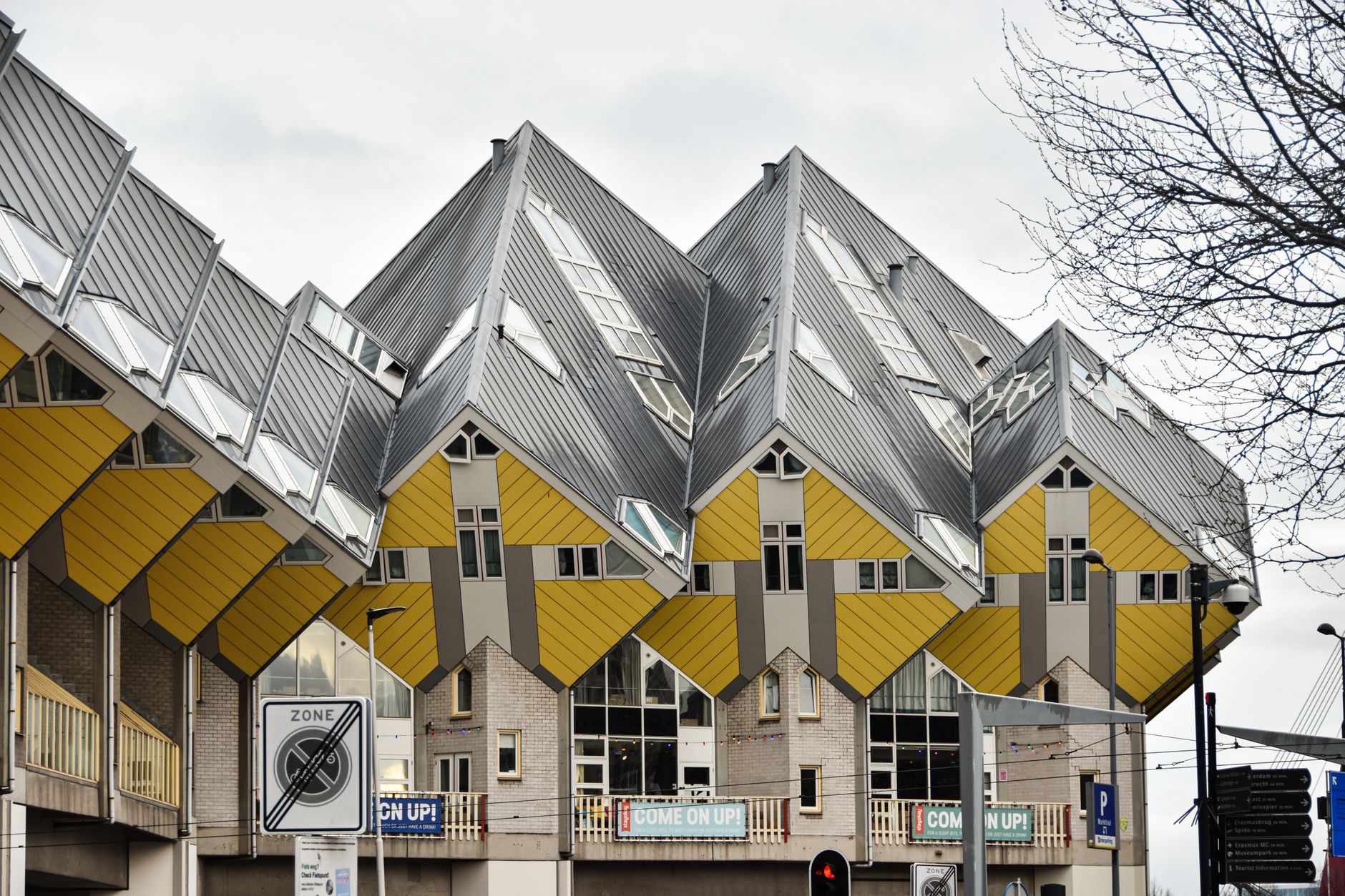
Rotterdam is the deliberate opposite: bombed flat in the war and rebuilt as a laboratory for modern architecture. Cube houses, the covered Markthal, a working port on a scale that's hard to grasp. It suits anyone bored by the pretty-Dutch-town formula.
The Hague carries the government, the monarchy and the beach at Scheveningen, plus the Mauritshuis with its small, perfect collection. Haarlem and Delft are compact, handsome and easy day trips. For the other Netherlands — quiet, watery, agricultural — head to Friesland in the north or the island of Texel in the Wadden Sea, where the crowds thin and the landscape opens out.
Getting around Netherlands is easiest with your own wheels, so it is worth hiring a car for a few days — and you will find somewhere to stay to suit most budgets.
When to visit
Spring is the headline season, and for reason: the tulip fields around the bulb region flower for a few weeks in April, and Keukenhof gardens open around then. It's genuinely spectacular and genuinely mobbed. If you go, go early in the day and rent a bike to see the fields themselves rather than only the gardens.
Summer is long-daylight and lively, with terraces full and canals busy, though July and August bring the biggest crowds and the highest prices. Autumn is underrated — mild, golden light on the water, museums quiet. Winter is dark, damp and cold, with a raw wind off the North Sea; the payoff is Christmas markets and, in a hard freeze, the rare chance to see people skating on frozen canals, which the Dutch treat as a national event.
Coming from Cyprus, brace for the light and the weather. Even in summer the sun is weaker and the rain arrives sideways. Pack a proper waterproof, not sunglasses.
What first-time visitors get wrong
They stay only in Amsterdam and conclude they've seen the country. They underestimate the bikes — both as a threat to pedestrians and as the best way to actually travel. They plan around a car, when trains between cities are frequent, fast and far less hassle. And they treat cash as a backup; plenty of places, including some supermarkets, are card-only, and a few won't take the international cards you'd expect.

What to eat
Dutch food is unpretentious and better than its reputation. Start with a raw herring — held by the tail, dipped in onions, eaten in two bites from a street stall. Bitterballen, crisp-fried and molten inside, are the standard companion to a beer. Fresh stroopwafels pressed to order, with the syrup still warm, bear no relation to the packaged version. In winter, look for erwtensoep, a pea soup thick enough to stand a spoon in.
The country's best eating is often its imports: Indonesian rijsttafel, a spread of many small dishes, is a legacy of colonial history and a proper feast. And the cheese is the real thing — buy young and aged Gouda from a market stall and taste the difference.