

 K / Pexels
Ireland: what to see and when to go
· Cyprus Travel Deals
The first thing that surprises people about Ireland is the light. It doesn't fall so much as shift — a bright hour swallowed by cloud, then a shaft breaking over a wet green field while it's still raining. You learn to carry a jacket in July and to stop trusting the forecast, because the weather in Ireland is a conversation, not a fact.
For a Cypriot used to reliable sun and dry heat, this is the real adjustment. Ireland is soft, damp, and green precisely because it rains often. Once you accept that, the country opens up.
What Ireland is actually like
Forget the shamrock-and-leprechaun postcard. Modern Ireland is a small, prosperous, fast-changing place where Dublin tech offices sit a short drive from sheep farms, and where the pub is still the social centre of a village but the coffee is now genuinely good.

The scale works in your favour. You can cross the whole island in a few hours, so you don't have to choose between city and coast. What you can't do is rush the west — the roads narrow, the coast folds in on itself, and the pleasure is in slowing down.
People are as friendly as the reputation suggests, but it's worth understanding the humour: dry, self-deprecating, quick to slag off a friend as a sign of affection. Take it warmly and you'll fit right in.
Where to go in Ireland
Dublin is the obvious start and worth two or three days. Trinity College, the Georgian squares, the museums (many of the national ones are free to enter), and the pubs of the older streets rather than the Temple Bar strip, which is loud, pricey and mostly tourists. Locals drink elsewhere; follow them.

The west coast is why most people come. Galway is the gateway — a compact, musical, student city where traditional music spills out of pubs on ordinary weeknights. From there you reach Connemara, all bog, mountain and stone walls, and the Cliffs of Moher, which are genuinely spectacular and genuinely mobbed at midday. Go early or late.
County Kerry and the Ring of Kerry deliver the classic Ireland — mountains dropping to the sea, the Dingle Peninsula, tiny harbours. The Wild Atlantic Way stitches the whole west coast together and rewards anyone willing to drive.
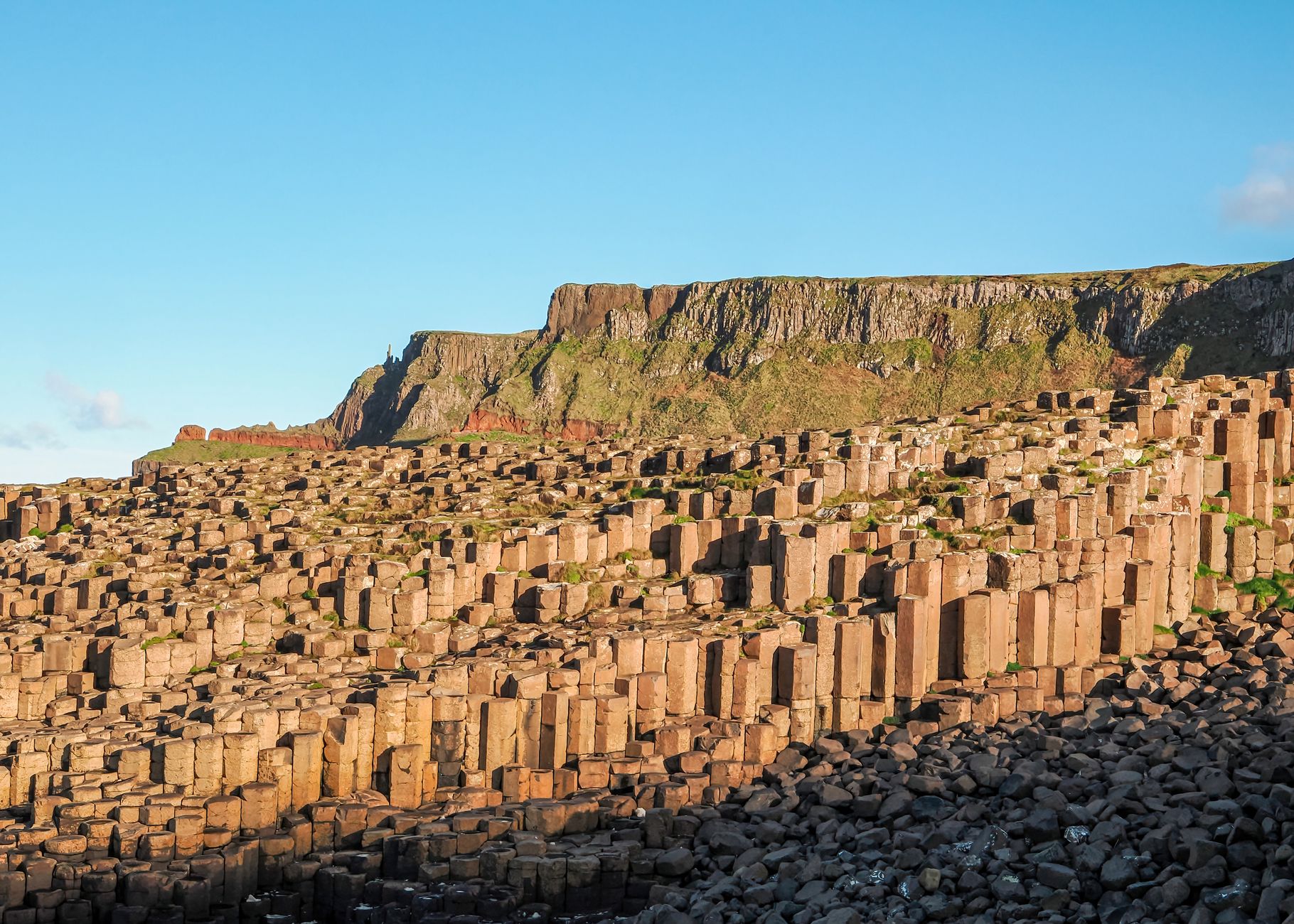
For something quieter and older, head to the north: the Causeway Coast in Northern Ireland, with its basalt columns, and Belfast, a city that has transformed itself and tells its complicated history honestly. Note that Northern Ireland uses pounds sterling, not euro, though crossing the border itself is seamless.
Cork in the south suits food-minded travellers, with its English Market and a rivalry with Dublin it takes only half-seriously.
Getting around Ireland is easiest with your own wheels, so it is worth hiring a car for a few days — and you will find somewhere to stay to suit most budgets.
When to visit
Summer (June to August) gives you the longest days — light until well past ten in June — and the best odds of dry stretches, though never a guarantee. It's also the busiest, with the west coast and Kerry crowded and accommodation stretched.
Late spring (May) and early autumn (September) are the sweet spot: milder crowds, the countryside at its greenest, and weather no worse than peak season.
Winter is dark, wet and short on daylight, but Dublin and the cities keep their pull, and the landscape has a bleak beauty. If you come for scenery, don't come between November and February.
Whatever the season, expect several kinds of weather in a day. This is not an exaggeration.
What first-time visitors get wrong
They try to see everything. The island looks small on a map, but the good roads in the west are slow, and cramming Dublin, Kerry, Galway and the north into a few days means seeing all of them from a car window.

They underestimate the driving. Rural roads are narrow, hedged and often single-track, and Ireland drives on the left — a real adjustment for anyone from Cyprus. Take it slowly and use the pull-in spots.
They plan around the sun. Build your trip around indoor-outdoor flexibility, not a forecast, and you'll never be disappointed.
They also overpay and overcrowd by hitting the famous sights at peak hours. The Cliffs of Moher at nine in the morning are a different experience from the same cliffs at one.
What to eat
Irish food has quietly become very good, built on excellent raw ingredients — grass-fed beef and lamb, dairy, seafood. Seek out fresh oysters and mussels on the west coast, smoked salmon, and a proper seafood chowder with brown soda bread.
The full Irish breakfast — eggs, bacon, sausage, black and white pudding, grilled tomato — is a genuine institution and sets you up for a day outdoors. Brown soda bread and Irish butter are worth the calories alone.
Drink the stout where it's poured well and given time to settle; it tastes different here than anywhere else. And don't skip the tea — it's the real national drink, offered constantly, and refusing it is nearly rude.

