

 Joni Tuohimaa / Pexels
Finland: what to see and when to go
· Cyprus Travel Deals
The light does something strange in Finland. In June the sun barely sets, and people mow their lawns at midnight; in December it hangs low and orange for a few hours, then gives up. This is a country where the weather and the darkness shape daily life more than any government does, and where a public sauna is less a luxury than a place to think.
What Finland is actually like
Forget the idea of a compact European capital surrounded by castles. Finland is mostly forest and water — tens of thousands of lakes, endless pine and birch, and long stretches of road where you might see more reindeer than people. It is quiet in a way that can unsettle visitors used to Mediterranean noise. People do not fill silences with small talk, and they queue with a discipline that feels almost religious. This is not coldness. Ask a genuine question and you will get a genuine, unhurried answer.
Coming from Cyprus, the contrast is total: space instead of density, restraint instead of warmth-on-the-surface, and a relationship with nature that runs deep. Finns take the forest seriously. The right to roam means you can walk, forage berries and mushrooms, and camp on most land regardless of who owns it, as long as you keep your distance from homes.
Where to go in Finland
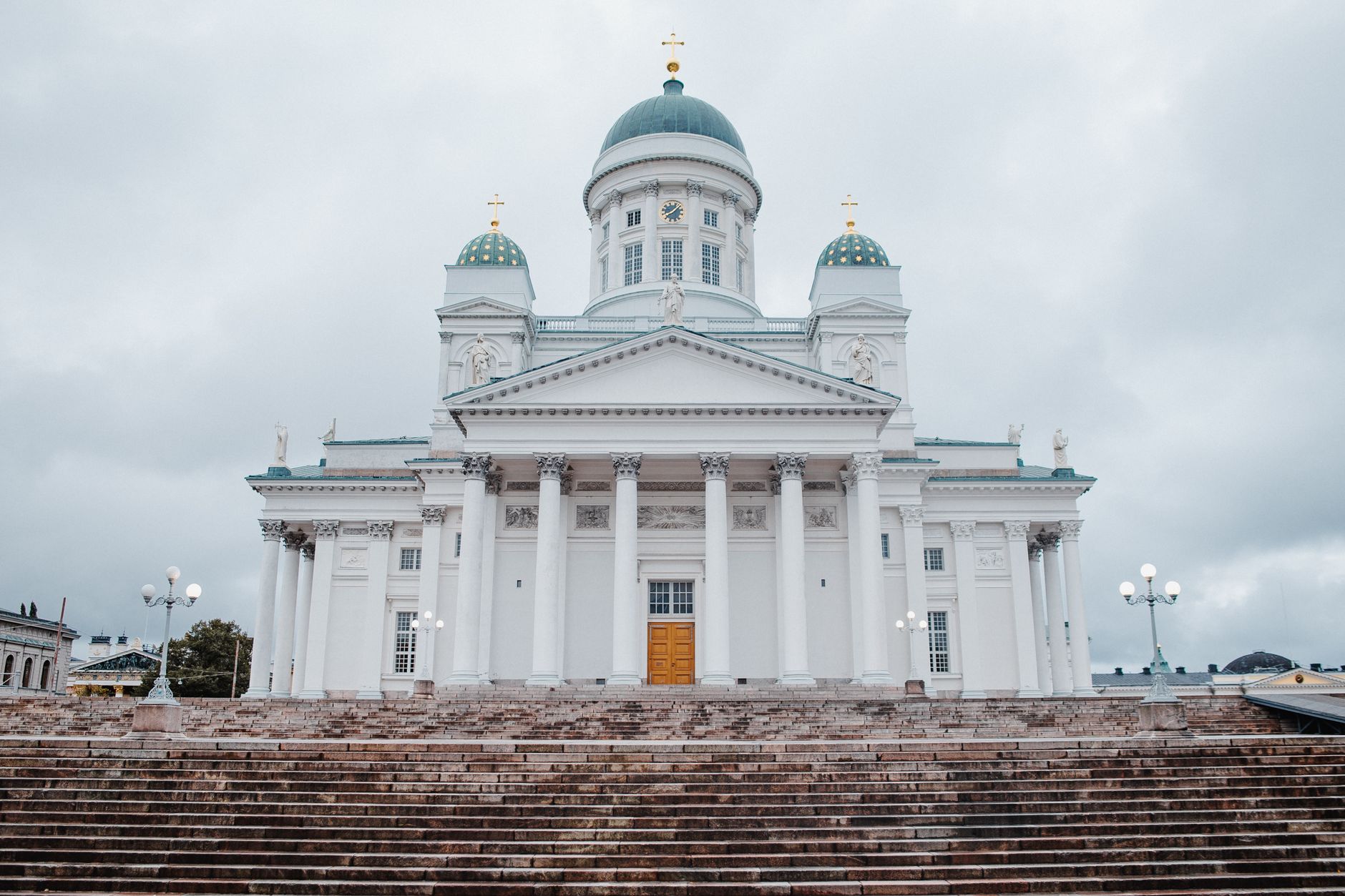
Helsinki suits a first visit and a long weekend. It is a maritime city of granite and pale neoclassical facades, with a working harbour, an island fortress you reach by ferry, and a design culture you can feel in the shops and cafés. It is walkable and calm. Give it two or three days and no more unless you love cities.

The Lakeland in the southeast and centre is the Finland of the imagination: wooden summer cottages, still water, and saunas by the shore. This is where Finns themselves go to switch off. It rewards slowness — a few days with a rowboat and a book, not a checklist.
Lapland, in the far north, is the reason many people come. Rovaniemi is the practical base, but the real appeal lies further out: snow-covered fells, husky and reindeer country, and the aurora on clear winter nights. In summer the same region turns into hiking and river terrain under the midnight sun. It is a genuinely different climate and landscape from the south, and worth the internal journey.
Turku and the archipelago on the southwest coast suit anyone who likes coast and history. Turku is the old capital, and the thousands of islands off it make for some of the best cycling and island-hopping in northern Europe.
Getting around Finland is easiest with your own wheels, so it is worth hiring a car for a few days — and you will find somewhere to stay to suit most budgets.
When to visit
There is no single best season — they are almost different countries.

Summer (roughly June to August) is when Finland comes alive. Long days, warm-enough lakes, terraces full of people making the most of the light. This is the easiest time for a first visit, though July is when many Finns take holidays and cottages fill up.
Winter (December to March) is for snow and the north. Lapland in deep winter delivers reliable snow, aurora chances, and the full sledge-and-sauna experience. The south gets cold and dark but far less snowy, and daylight is genuinely short. Dress for it and it is magical; underestimate it and you will be miserable.
Spring and autumn are the honest travellers' seasons. Autumn brings ruska, when the northern forests turn red and gold and the crowds thin. Spring is muddy and uncertain but cheap in spirit and increasingly bright.
What first-time visitors get wrong
The biggest mistake is treating Finland like a city break. The cities are pleasant; the country is the point. Plan to get out of Helsinki.

The second is underestimating distances. Lapland is a long way from Helsinki, further than people assume from the map. Trying to do south and far north in a few days means spending your holiday in transit.
The third is misjudging the season's daylight and cold, in both directions. Summer's endless light disrupts sleep — bring an eye mask. Winter cold is dry but serious; proper layers, gloves and boots are not optional.
And treat the sauna properly. It is not a spa gimmick. Go naked or wrapped as locals do, sit quietly, and if there is a lake or cold water outside, use it.
What to eat
Finnish food is simple and seasonal rather than showy. Eat rye bread, dark and dense, and the fish — salmon, whitefish, and small fried vlei perch by the lake. In late summer, forage or buy wild berries, especially cloudberries and bilberries. Try karjalanpiirakka, the Karelian rice pastry, usually topped with egg butter. Reindeer, served sautéed with mashed potato and lingonberry, is worth ordering in the north. Coffee is a national habit — Finns drink a great deal of it — usually with a cardamom bun called pulla. Salty liquorice divides everyone, including the locals.